
Why Satellite Broadband Is Becoming a Bigger Part of U.S. Rural Connectivity Plans
Expanding broadband isn’t just about laying more fiber. It’s about finding practical ways to reach the rugged, rural, and hard-to-serve places where traditional infrastructure projects are slow or cost-prohibitive. That challenge is at the heart of the National Telecommunications and Information Administration’s BEAD program, which is fueling one of the largest broadband infrastructure efforts in U.S. history. Fiber networks remain at the center of those plans, but the high cost and complexity of reaching remote regions means fiber alone won’t connect everyone quickly or affordably.
Because fiber and fixed wireless can’t cover every corner of the country, states are increasingly turning to satellite broadband to reach the most challenging locations. Low-Earth orbit (LEO) providers like Starlink and Amazon Kuiper are being factored into BEAD strategies as practical solutions for areas where traditional infrastructure isn’t financially or logistically viable. States like Maine and Hawaii have already used satellite service to reach homes in remote and geographically complex areas where fiber or fixed wireless deployments would be slow or cost-prohibitive.
For states looking to connect their most difficult-to-serve communities, understanding how satellite fits into the rural broadband mix is becoming essential. Watch our recent webinar where we’re joined by broadband leaders from Maine and Hawaii for a discussion on performance trends, policy implications, and the evolving role of satellite broadband.
Satellites Are Playing a Bigger Role in BEAD Allocations
Extending broadband into rural, sparsely populated, and geographically challenging areas has always required tradeoffs between cost, timelines, and technology. Fiber may deliver the strongest long-term performance, but extending it to extremely rural or geographically isolated areas can cost hundreds of thousands of dollars per location and take years to complete. In Alaska, for example, Quintillion Subsea is receiving more than $113,000 per address to extend fiber—underscoring just how expensive these builds can be. Those realities have forced states to look at a wider mix of technologies, and satellite connectivity has quickly become part of that conversation.
BEAD allocations are already reflecting this shift. While fiber remains the dominant technology, satellite internet’s growing share shows that states aren’t treating it as a niche option; many are planning for it as a complementary piece of their buildout strategies—particularly in places where fiber or fixed wireless is too expensive or complex to deploy.
- Fiber is receiving bulk of BEAD funds: Fiber accounts for the majority of BEAD allocations, but satellite internet has carved out a meaningful share of initial awards across several states.
- Starlink and Kuiper entering the picture: Starlink currently represents about 3% of BEAD funding awarded so far, with Amazon Kuiper just under 1%.
- Rising confidence in satellite internet: The share of BEAD dollars directed to satellite internet signals increasing trust in the technology as a practical option for reaching rural and hard-to-serve communities.
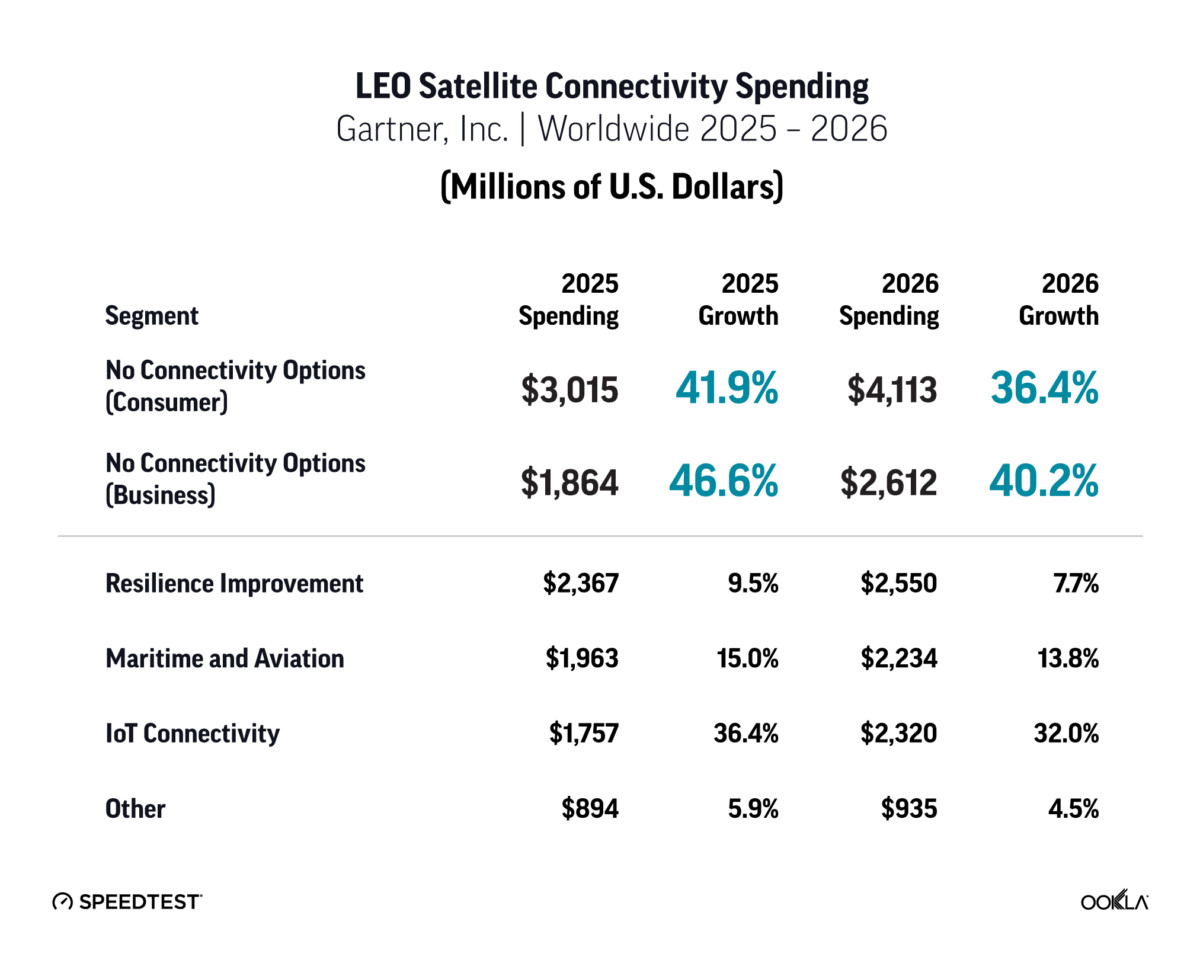
Even a small share of BEAD funding can cover areas where fiber builds would have stalled or taken years. Satellite connectivity is moving from a fallback option to a planned part of many states’ broadband strategies.
Real-World Deployments Show How States Are Using Satellites
The shift toward satellite connectivity is happening now. States are already using LEO satellite service to close stubborn coverage gaps that traditional infrastructure can’t reach quickly or affordably. Maine and Hawaii offer two clear examples of how the technology is being put to work today.
These states face some of the toughest connectivity challenges in the country—from remote islands and mountainous terrain to areas where no infrastructure exists at all. Instead of waiting for long fiber construction timelines, both turned to satellite as a fast bridge to reliable service. In the webinar, we got a closer look at how Maine and Hawaii are using satellite:
- “Working Internet ASAP” connecting unserved homes: Maine’s Working Internet ASAP program provided more than 8,800 unserved locations with free Starlink kits and installation, focusing on households with no service options of any kind.
- Hawaii blending fiber and satellite: Hawaii’s approach combines fiber and satellite internet to reach rural areas, where cutting through lava rock or laying undersea cables would be prohibitively expensive.
- Early deployments tied to BEAD: Both states are aligning their satellite connectivity efforts with BEAD planning so those initial builds can transition smoothly into long-term programs.
The early adoption of satellite internet reflects both a shift in policy and a leap in performance, moving the technology from a last-resort option to an intentional part of state broadband strategies.
Strengths and Limits of LEO Satellite Technology
LEO satellite connectivity has advanced quickly in the past decade. The technology is now capable of delivering broadband speeds to places that were once all but unreachable. Locations that would have required massive fiber investments or been written off entirely can now be connected far more quickly. That shift is reshaping how states and providers think about rural deployment strategies.
Massive increases in spectral efficiency, falling launch costs, and cheaper user equipment have made satellite internet both faster and more widely available. Several technical and economic factors are driving this expansion, while also shaping where the technology is most effective.
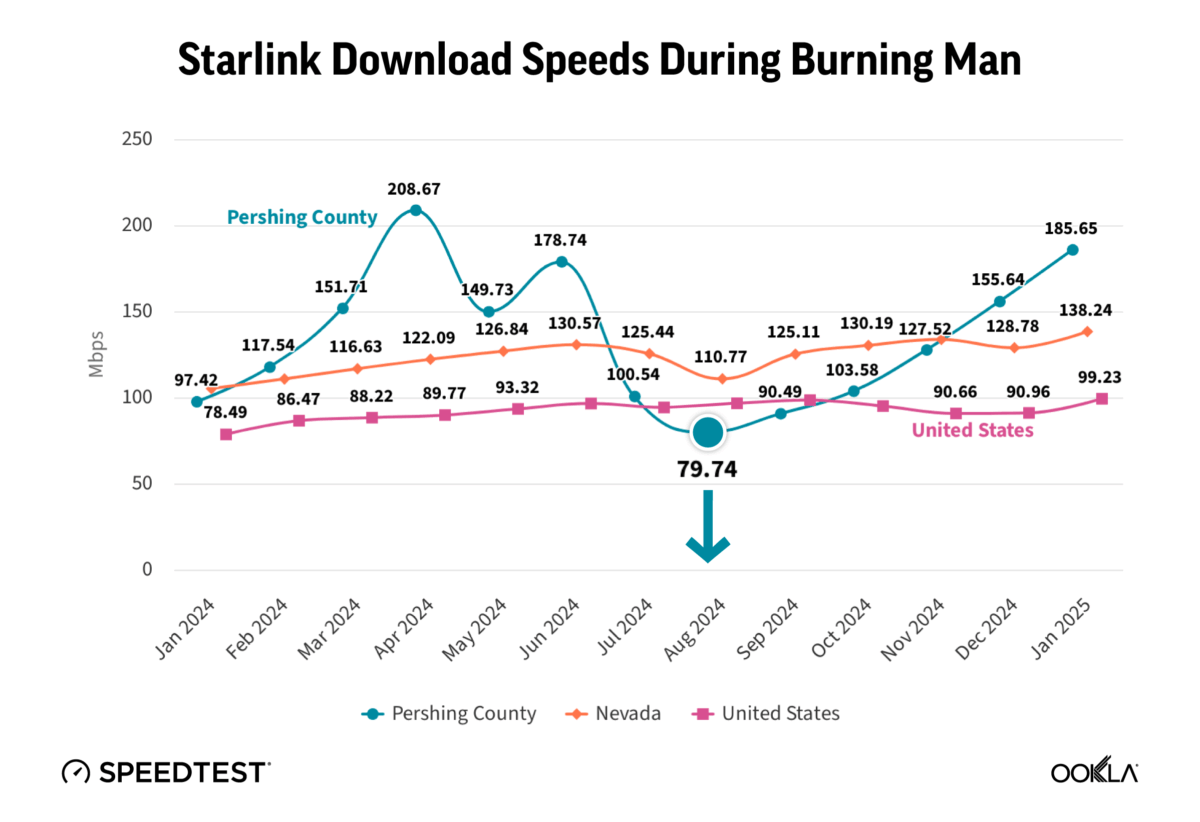
- Localized congestion remains a factor: Network slowdowns can occur in high-traffic areas, as seen in Pershing County, Nevada during the Burning Man festival.
- Spectrum reuse driving capacity gains: Satellites now use more focused “spot beams” that cover smaller geographic areas. Dividing coverage into smaller zones allows providers to reuse the same frequencies in different places, which increases total network capacity without needing additional spectrum.
- Lower costs enabling large constellations: Falling launch and build costs have made it financially feasible to deploy thousands of satellites, dramatically expanding the scale and reach of satellite internet networks.
- Wider coverage, but limited density: Satellites can now cover nearly every corner of the country, but overall capacity remains best suited for low-density regions. Heavy usage in concentrated areas can still strain the network, and in some locations providers have introduced usage tiers or surcharges to manage excess demand.
Satellite connectivity plays a critical role in reaching rural and remote communities where fiber or fixed wireless is impractical or too expensive. It works best as one piece of a broader broadband strategy that blends multiple technologies to reach every corner of a state.
Reliability, Compliance, and Performance Monitoring
When states invest millions to bring broadband to rural communities, delivering a signal isn’t enough. Those connections need to support everyday needs like work, school, telehealth, and emergency services with consistent speeds, low latency, and reliable uptime (the amount of time a connection is available and working as expected), giving users a dependable experience day in and day out. To make sure that happens, states are moving beyond one-time performance checks at installation—where service is validated only on day one—and putting systems in place to measure how well connections perform over time.
Starlink’s latency in the U.S. averages around 40 milliseconds, well below BEAD’s 100 ms requirement—a strong indicator that the technology can meet performance targets. But environmental factors can still affect individual sites. Snow, ice, or tree cover can interfere with line-of-sight and impact connection quality, though professional setups help minimize those disruptions. States are starting to define how they’ll verify performance, ensure service meets funding benchmarks, and build accountability into satellite deployments.
- Independent verification tools: Speedtest and other third-party platforms can help verify that real-world performance matches program requirements.
- Strong reliability signals in Maine: The state has reported minimal complaints from satellite internet users, a good indicator of reliable service in hard-to-serve areas.
- Hawaii adapting regulatory frameworks: Hawaii is modifying existing regulatory frameworks to ensure providers meet performance expectations under BEAD-funded deployments.
- Enforcement mechanisms still developing: Oversight and accountability frameworks are expected to mature as satellite deployments scale.
Satellites can bring broadband to rural communities quickly, but speed alone isn’t the goal. States are putting new systems in place to make sure that connectivity remains consistent, reliable, and measurable over time.
Competition and Capacity Will Shape What Comes Next
Satellite connectivity is moving into a new phase—one defined less by proving it works and more by deciding how to use it at scale. As states plan their long-term broadband strategies, they’ll be weighing technical tradeoffs, provider options, and capacity constraints in ways they haven’t had to before.
Amazon Kuiper’s upcoming commercial launch will introduce real competition for Starlink, giving states more than one major provider to consider for BEAD-funded deployments. Starlink relies on Ku band spectrum, which is generally less sensitive to weather interference, while Kuiper will use Ka band spectrum, which can support stronger uplink capacity but may be more vulnerable to signal loss in heavy rain.
The combination of band choice and network architecture will shape how each service performs and where it fits best. As competition heats up, several factors will shape how states evaluate satellite providers under BEAD.
- Kuiper entering the market: Amazon Kuiper’s commercial launch will bring new competitive pressure to Starlink’s early lead, giving states more leverage and flexibility in future deployments.
- Band differences shaping performance: Ku-band (used by Starlink) is less sensitive to weather, while Ka-band (planned for Kuiper) can support stronger uplink performance but may be more vulnerable to interference. These tradeoffs will influence where each provider’s technology is best suited.
- Scaling capacity as a key challenge: Expanding network capacity as more users come online will be critical to maintaining performance, particularly in rural areas with seasonal demand spikes or high-density events.
As satellite competition ramps up, states will need to balance cost, coverage, and long-term performance when deciding how these technologies fit into their broadband strategies. The choices they make in the coming years—about providers, technologies, and capacity planning—will shape how quickly and reliably rural communities get connected.
Conclusion
Satellite broadband is no longer a fringe technology. It’s being deployed today in some of the toughest connectivity environments in the U.S., and BEAD allocations show it’s becoming part of state-level planning in a meaningful way. Maine and Hawaii are proving what’s possible when satellites are used strategically, while performance improvements make the technology more viable every year.
As competition increases and deployment strategies mature, satellites are poised to play an integral role in helping close the digital divide, complementing fiber and fixed wireless to deliver broader, faster, and more resilient connectivity.

To learn more about the emergence of satellite internet, watch our full webinar on demand, “Satellite Internet Uncovered: Performance Trends and Policy Implications.”
Ookla retains ownership of this article including all of the intellectual property rights, data, content graphs and analysis. This article may not be quoted, reproduced, distributed or published for any commercial purpose without prior consent. Members of the press and others using the findings in this article for non-commercial purposes are welcome to publicly share and link to report information with attribution to Ookla.