Public Safety Connectivity: How Agencies Can Strengthen Critical Communications
Connectivity failures are inconvenient for most people, but for public safety agencies they can be catastrophic. Whether coordinating evacuations, dispatching first responders, or keeping hospitals online, resilient networks are essential to saving lives and protecting communities.
Real-world disasters highlight the stakes. From wildfires in Maui and California to hurricanes across the Southeast, connectivity has been disrupted when agencies needed it most. In those moments, responders face delays, residents lose access to critical information, and hospitals struggle to coordinate care. The risks are clear: without resilient communications, every aspect of emergency response becomes harder and more dangerous.
Agencies need visibility into how networks perform in the real world. Ookla’s ecosystem—Speedtest, Downdetector, and Ekahau—provides the tools to strengthen preparedness, improve response, and accelerate recovery.
Read on to learn why resilient connectivity is so vital, the key challenges agencies face, and what recent disasters like the Lahaina wildfires reveal about the stakes. To dig deeper, download our full guide: Building Resilient Connectivity for Public Safety and Emergency Management.
When Communication Fails, Safety Fails
Disasters often strike in chaotic conditions where infrastructure is already damaged or failing. Responders may be rushing into wildfires, floods, or tornadoes with limited visibility and unreliable networks. Hospitals and shelters may suddenly find themselves overwhelmed, with communications buckling under the weight of demand. In these situations, reliable communication can often determine whether help arrives on time.
Communication breakdowns ripple outward. A single dead zone can cut a fire crew off from dispatch. If hospitals can’t access patient records or coordinate ambulance arrivals, patients may not get the care they need in time. When dispatchers can’t relay caller details in real time, teams enter dangerous situations without critical information—and communication breakdowns can affect every group involved in an emergency response:
- First responders: Without reliable coverage, teams may lose contact with dispatch or lack access to real-time data
- Dispatchers: Disrupted networks hinder the ability to gather details from callers, delaying information for crews in the field
- Fire teams: Loss of radio or mobile service can force reliance on hand signals or runners, slowing response when every second matters
- Healthcare and EMS: Connectivity failures prevent hospitals and ambulances from accessing patient records or coordinating care, directly affecting outcomes
Loss of service and communication blackouts are not hypothetical risks. From Chief Barry Hutchings of the Western Fire Chiefs Association describing a fire scene with no portable radio coverage, to hurricanes and wildfires cutting off entire regions, the consequences are well documented. Reliable communications across response routes, hospitals, and community centers can mean the difference between a timely response and catastrophic outcomes.
Key Connectivity Challenges for Agencies
Agencies are often asked to deliver flawless communication in the most challenging environments. Rural areas stretch networks thin, mountains block signals, and older government facilities can block wireless coverage. During a disaster, even modern infrastructure can be compromised by fire, flood, or wind damage.
The problem goes beyond poor coverage or inadequate capacity; agencies also often lack detailed insight into how networks perform in specific areas. An agency may know a dead zone exists, but they often lack the data needed to demonstrate the problem and secure funding for improvements. In other cases, they may be flying blind during an outage, without real-time visibility into what has failed or how widespread the issue is. Without the right tools, even well-prepared teams can struggle to manage the connectivity challenges emergencies present:
- Coverage and reliability gaps: Rural areas, mountainous terrain, and dense building materials can create persistent dead zones
- In-building connectivity gaps: Older or secure government facilities often block signals and limit network upgrades
- Outdated infrastructure and regulatory hurdles: Aging infrastructure and regulatory hurdles slow tower deployments and upgrades
- Situational blind spots: Without real-time network data, agencies can often lack the visibility needed to pinpoint outages, understand their scope, and coordinate an effective response
- Infrastructure vulnerabilities: Natural disasters can often damage physical infrastructure, creating extended blackouts
- Funding constraints: Without concrete evidence of where and how networks are falling short, agencies can struggle to secure federal or state support for upgrades
These challenges leave agencies vulnerable. Without reliable coverage and visibility, response times slow, public trust erodes, and communities face greater risk during emergencies.
A Framework for Preparedness, Response, and Recovery
Public safety cannot be purely reactive. Agencies must plan in advance, monitor conditions as crises unfold, and evaluate how well systems recover once the danger passes. The emergency management lifecycle—preparedness, response, recovery—ensures that agencies are not just reacting, but instead building long-term resilience.
In practice, responsibilities for each stage of that lifecycle are typically split across different teams. One group may focus on planning coverage improvements, another may monitor outages as they occur, and another might validate in-building Wi-Fi performance. Without a unified view, important gaps can go unnoticed.
To close those gaps, agencies need integrated solutions that connect every stage, from pre-disaster planning through post-disaster recovery. A complementary mix of network performance data from Speedtest Intelligence®, website and service outage insights from Downdetector®, and wireless survey capabilities from Ekahau help ensure that each phase of the emergency management lifecycle is supported with the right visibility and intelligence:
- Preparedness: Agencies use Speedtest Intelligence® data to identify coverage gaps, assess high-risk zones, and validate network upgrades. Public safety IT teams also use Ekahau tools to conduct wireless surveys and verify network performance in critical locations such as hospitals, command centers, and shelters
- Response: Downdetector® detects website and service outages in real time, giving agencies early awareness of issues. Meanwhile, Speedtest provides immediate visibility into performance changes, while Ekahau validates temporary networks in shelters or mobile command posts.
- Recovery: Agencies measure restoration speed, validate coverage improvements, and document outcomes to inform future investments. Downdetector and Speedtest data help secure funding by showing where networks fail during emergencies and measuring how quickly they recover.
The emergency management lifecycle—preparedness, response, recovery—ensures agencies are not only reacting in the moment but building more resilient systems for the future.
Lessons from Lahaina
When wildfires tore through Lahaina, Hawaii in August 2023, connectivity collapsed when residents and emergency managers needed it most. Evacuees had little information about safe routes, and responders struggled to understand whether networks were down locally or across entire islands. Without visibility into network conditions, emergency responders could not determine where they could reach people and where communications had already failed.
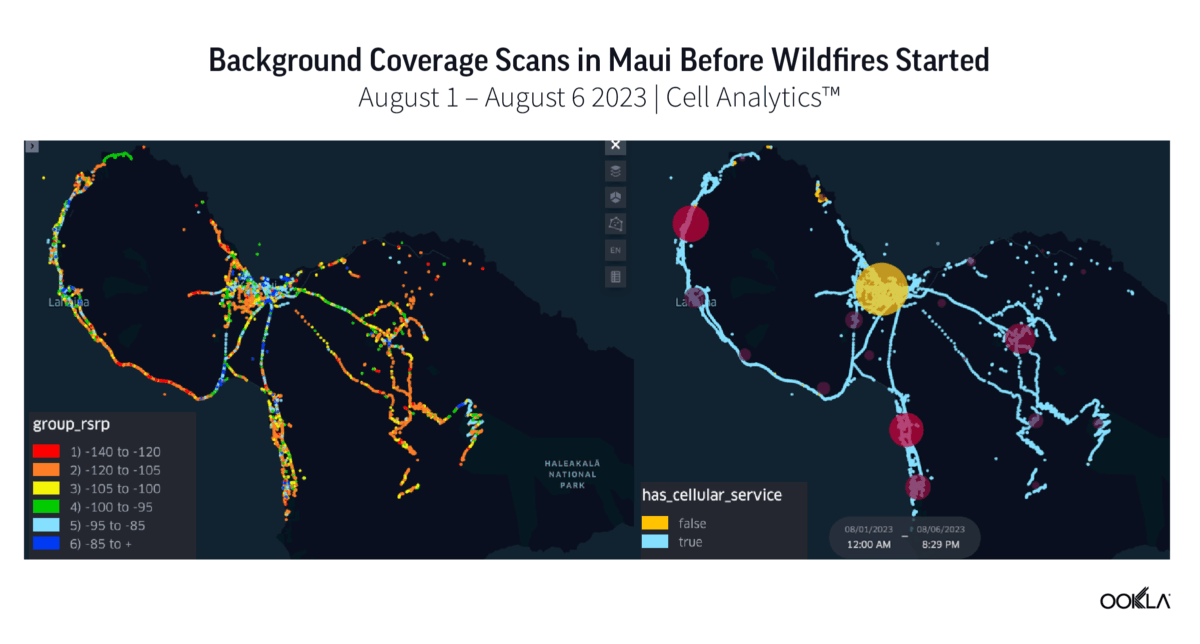
Tools like Downdetector and Speedtest provided critical real-time visibility into network conditions. By combining outage reports with performance data, agencies gained the situational awareness they needed to prioritize limited resources and focus on areas most in need.
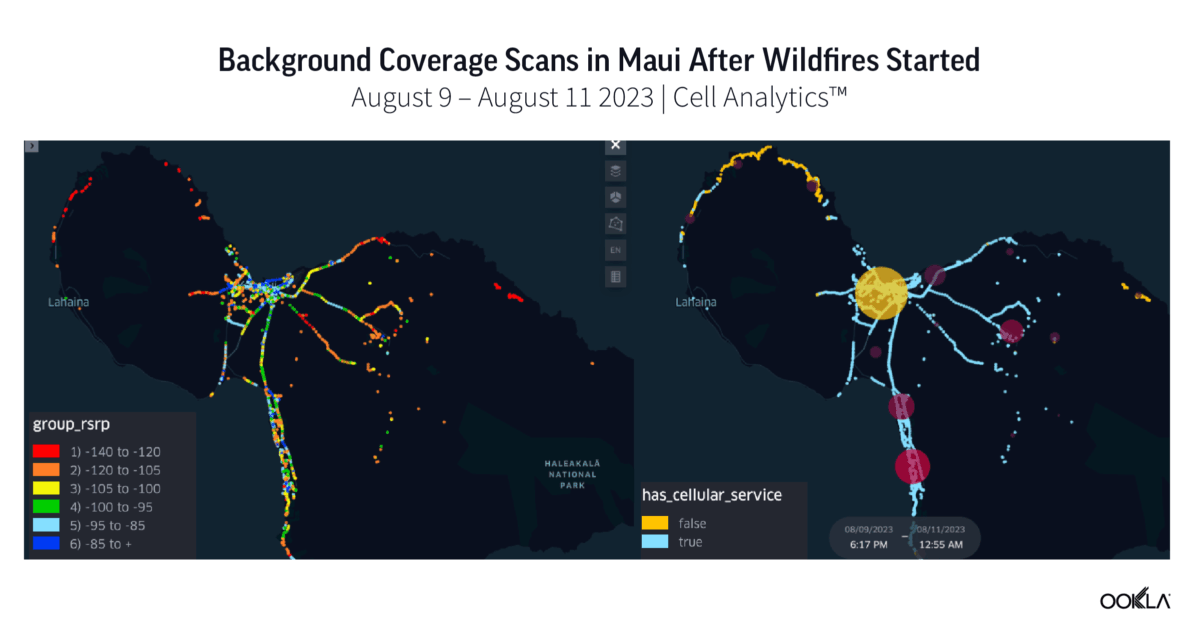
The insights revealed a clear picture of how the crisis was unfolding and how that visibility informed response decisions. Downdetector tracked sudden spikes in outage reports, while Speedtest Intelligence revealed steep declines in network performance. Together, those insights allowed responders to distinguish between isolated disruptions and broader failures, helping prioritize key resources. The Lahaina fires show how connectivity insights can be as essential as water or fuel when disaster strikes.
The lesson from Lahaina is clear: visibility into connectivity provides essential intelligence during disasters. Identifying where networks fail and how they recover enables agencies to coordinate more effectively with providers, support first responders, and keep communities informed as conditions evolve.
Conclusion
Public safety and emergency management agencies cannot afford uncertainty in communication. Reliable networks are the foundation of preparedness, response, and recovery—and the consequences of failure are too great to ignore.
Ookla’s ecosystem of Speedtest, Downdetector, and Ekahau gives agencies the visibility, reliability, and security they need to protect communities. With better data, decision-makers can plan smarter, respond faster, and restore service more effectively when disaster strikes.
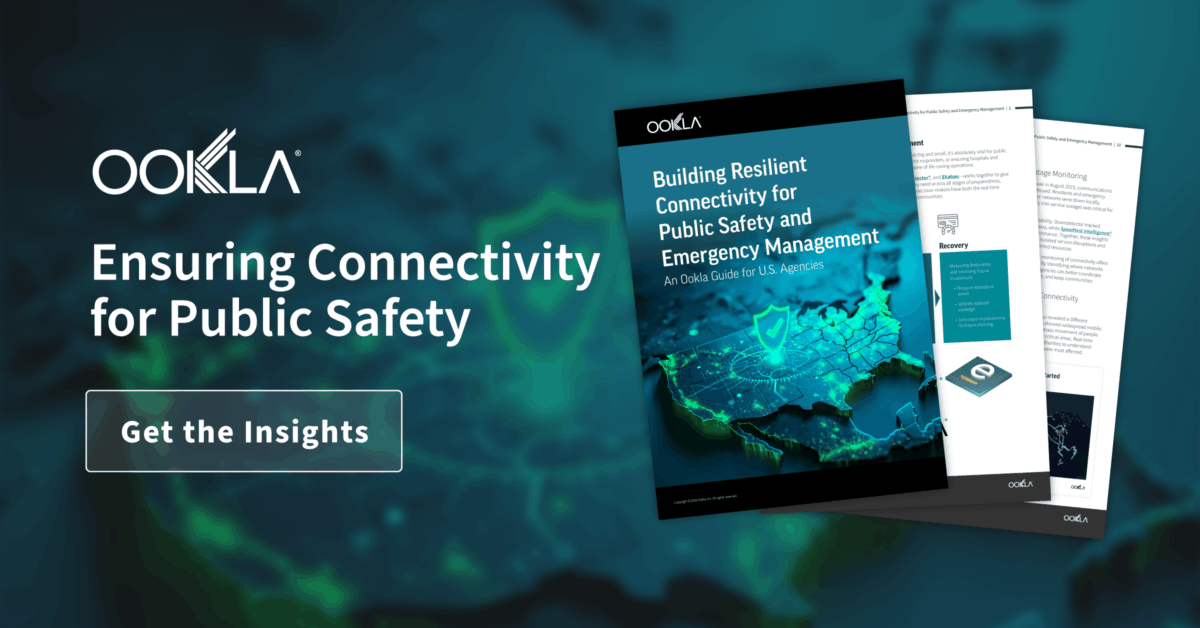
To learn how your agency can strengthen its response capabilities and ensure networks are resilient when it matters, check out our full guide, Building Resilient Connectivity for Public Safety and Emergency Management.
Ookla retains ownership of this article including all of the intellectual property rights, data, content graphs and analysis. This article may not be quoted, reproduced, distributed or published for any commercial purpose without prior consent. Members of the press and others using the findings in this article for non-commercial purposes are welcome to publicly share and link to report information with attribution to Ookla.