
Building a Global Benchmark: Introducing the WBA Wi-Fi Design Standard
Wi-Fi is now the default utility for connectivity in our homes, offices, factories, public spaces, and industrial environments. Yet, despite the ubiquity of connectivity, the end-user experience remains surprisingly inconsistent. We’ve all experienced the frustration of coverage gaps, “sticky” clients, or sudden drops in performance, even when using modern networks and devices.
As Wi-Fi deployments increasingly incorporate the 6 GHz spectrum and evolve toward Wi-Fi 7, network design and operation have grown more complex. Inconsistent deployments across operators and vendors are leading to fragmented design and performance outcomes that affect everyone—from the network engineer to the end-user.
As an industry leader with a commitment to measure, understand, and help improve connected experiences, Ookla proposed the formation of a Wireless Broadband Alliance (WBA)-led working group to develop a Wi-Fi Design Standard, helping bridge a critical gap between theoretical Wi-Fi standards and the realities of real-world deployment and user experience.
While standards bodies like the IEEE define the protocols (e.g., 802.11ax/be) and the Wi-Fi Alliance certifies interoperability, until now there has been no globally recognized standard for both the design and deployment of these networks. This void has led to the fragmentation described above, where inconsistent design practices result in unpredictable performance, even on the latest hardware.
That gap is what the WBA Wi-Fi Design Standard is intended to address. The initiative provides the industry with a vendor-neutral framework that defines what “good” connectivity looks like—quantifiable through rigorous KPIs and metrics. This work represents a natural evolution of Ookla’s mission to measure and improve global connectivity, building on the foundations established through Speedtest Certified™ and the WBA’s previous deployment guidelines.
The Challenge: Moving Beyond Fragmentation
While Wi-Fi technology itself is standardized, the way it is deployed is not. In practice, “fragmentation” shows up as different design assumptions, planning methods, and performance targets across operators, vendors, and industry verticals. As a result, similar environments can be built and evaluated in very different ways, with inconsistent outcomes.
This lack of uniformity creates significant challenges:
- Operators struggle to deliver predictable quality assurance.
- Enterprises face increasing complexity in dense environments.
- End-users experience inconsistent performance, even with high-end devices.
At the same time, several industry trends are accelerating the need for standardization. The adoption of Wi-Fi 6E and Wi-Fi 7, the convergence of fixed and mobile architectures, the shift toward QoE-driven operations, and the growth of managed Wi-Fi services all demand more consistent, repeatable design and validation practices. These trends expose a clear opportunity for a global Wi-Fi Design Standard that unifies best practices, defines measurable KPIs, and supports reliable, multi-vendor deployments at scale.
Our Objective: A Unified Global Standard
The WBA Wi-Fi Design Standard project, led by Ookla, is focused on defining a clear, vendor-neutral framework for how Wi-Fi networks should be planned, deployed, and evaluated in real-world environments.
The goal is not to replace existing protocol standards, but to complement them by establishing consistent design and validation expectations that help translate theoretical capability into predictable, real-world performance.
Building on the WBA’s earlier deployment guidelines, this initiative evolves those principles into a formal, measurable standard aligned with modern Wi-Fi 6, 6E, and Wi-Fi 7 networks. By grounding design guidance in practical, testable outcomes, the standard aims to give the industry a shared reference for how networks should be designed and assessed across different environments and use cases, not just how they perform in theory or under ideal conditions.
Key areas of focus will include:
- End-to-End Coverage: Addressing every phase from site survey, to design, installation, and operation.
- Performance Metrics: Defining minimum and relevant KPIs for RF performance, backhaul capacity, and Quality of Experience (QoE) including latency, jitter, throughput, roaming, and ISP backhaul capacity.
- Vertical Specific Models: Tailoring guidance for diverse environments such as residential, enterprise, public venues, industrial IoT, and smart campuses.
- RF & Capacity Planning: Guidelines for Access Point (AP) and antenna placement, density, and interference management to ensure consistent coverage.
- Next-Gen Configuration: Offers critical guidance on 6 GHz spectrum adoption, multi-band steering strategies, and roaming configurations to prevent device disconnects.
- Security Enforcement: Best practices for deploying WPA3 and handling Transition Modes to ensure security doesn’t come at the cost of connectivity.
Why a Common Wi-Fi Design Standard Matters
This project is not about producing another static document; it’s about creating a shared design framework the industry can rely on when planning, deploying, and validating Wi-Fi networks. While it is easy to define RF design targets or collect large volumes of performance metrics, it is far more difficult to align on which design decisions and KPIs truly influence real-world user experience.
“Wi-Fi design has long been treated as an art rather than a discipline, driven by individual experience and trial-and-error. That approach no longer scales. As part of the WBA’s mission to improve global broadband experiences through collaboration and shared standards, a globally aligned Wi-Fi design standard is essential to move beyond fragmentation and enable multiple stakeholders to engage. This will help deliver consistent, measurable performance, predictable Quality of Experience, and deployments that meet real-world operational and business requirements.” – Bruno Tomás, CTO of the Wireless Broadband Alliance (WBA)
A common framework helps reduce guesswork, improve consistency, and set clearer expectations across roles and environments. Those benefits show up in different ways across the Wi-Fi ecosystem.
For Network Designers and Surveyors:
- Eliminate Guesswork: By establishing industry-aligned principles for planning and site surveys, designers can rely on a proven framework rather than subjective “rules of thumb.”
- Standardized Validation: Surveyors will have a clear set of global metrics to test against, making it easier to validate designs and prove that a network meets performance expectations.
For Operators and Managed Service Providers (MSPs):
- Enforceable SLAs: Operators can embed this guideline into Request for Proposals (RFPs) and Service Level Agreements (SLAs), ensuring that vendors and integrators deliver a network that meets specific, measurable quality benchmarks.
- Predictable Quality: An industry-aligned approach reduces variability in deployments, helping MSPs deliver consistent reliability across different customer sites.
For Infrastructure Vendors:
- Product Alignment: Vendors can align their tools and AP features with a globally recognized design framework, ensuring their products are “design-ready” for compliant networks.
- Streamlined Requirements: A unified standard reduces the need to customize solutions for every different operator’s unique (and often conflicting) design requirements.
For End-Users and Enterprises:
- Consistent Experience: Whether in a stadium, an office, or at home, users will benefit from a network designed to handle roaming and capacity correctly, delivering more consistent performance, faster response times, and fewer dropouts or periods of lag.
- Future-Proofing: Enterprises investing in networks built around the principles outlined in this new Wi-Fi design standard will be better prepared for the demands of Wi-Fi 6E and Wi-Fi 7.
Tools and Capabilities Driving the Solution
To solve the challenges of fragmented design and validation, Ookla brings a unique combination of global network intelligence and precision measurement tools to the working group:
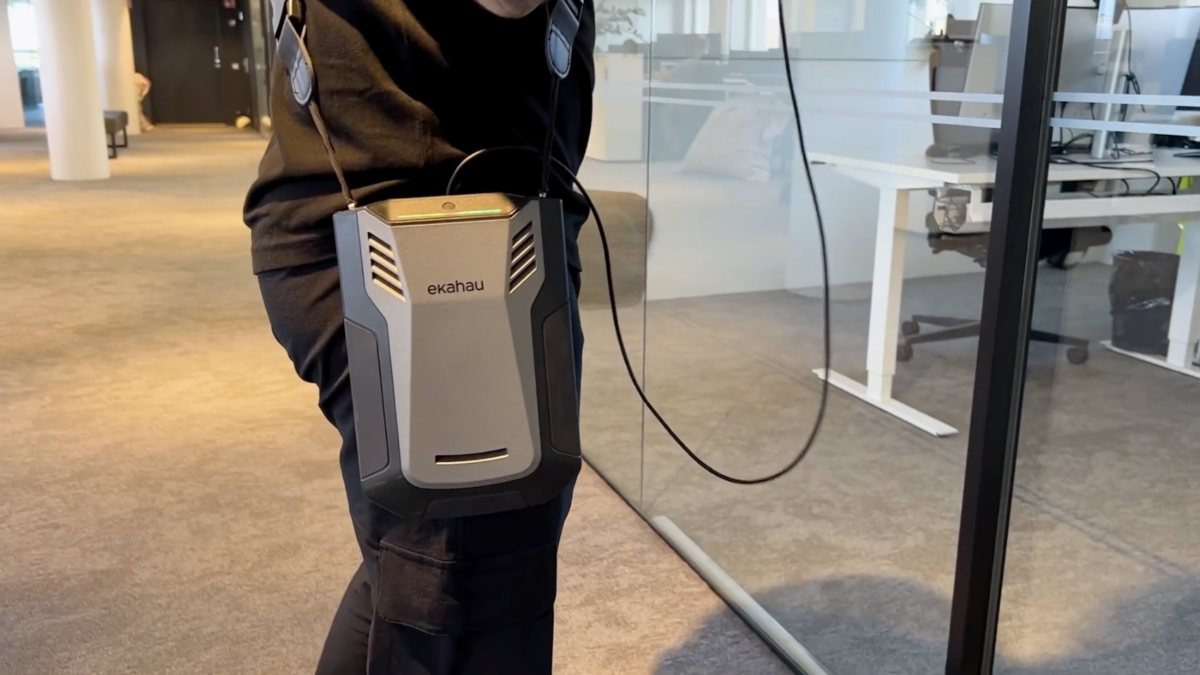
- Precision RF Measurement & Diagnostics (Ekahau Sidekick 2): Ekahau by Ookla, provides the industry-standard hardware for spectrum analysis and Wi-Fi site surveys. The Sidekick 2 allows network engineers to capture precise RF data across 2.4, 5, and 6 GHz bands, identifying interference, coverage gaps, and capacity issues that software-only tools miss.
- AI-Assisted Predictive Design (Ekahau AI Pro): Our planning software enables architects to model complex environments—from stadiums to warehouses—and simulate network performance before a single access point is installed. This ensures designs meet capacity requirements for high-density environments and modern applications like VoIP and video streaming while adhering to the WBA Wi-Fi design standard.
- Real-World Quality of Experience (QoE) Testing: Beyond RF metrics, Ookla contributes the methodology for measuring the actual end-user experience. By integrating Speedtest® directly into the survey workflow, we can correlate RF signal strength with real-world throughput, latency, and jitter data. This allows operators to design beyond traditional networks that just had “good coverage,” to a modern Wi-Fi design based on WBA standards that actually delivers the connectivity required for demanding user applications.
- Global Performance Benchmarks: Leveraging Ookla’s vast dataset of global network performance, we help the working group establish realistic, data-backed performance thresholds for different verticals, ensuring the new standard is grounded in how networks perform in the wild, not just in a lab.
Join the Initiative
Developing a truly global standard is an ambitious project and requires global collaboration. We are inviting wireless network designers, operators, infrastructure vendors, managed service providers, and certification bodies to join this working group and help shape the future of Wi-Fi deployment.
The development phase is set to kick off in Q1 2026, with a target to deliver the WBA Wi-Fi Design Standard v1.0 by the end of the year. As the effort moves forward, Ookla will continue providing real-world measurement, design, and performance insights to help ensure the standard remains grounded in how networks are deployed and experienced in the real world.Participation offers a direct opportunity to help define the benchmarks, KPIs, and design principles that will shape future Wi-Fi deployments worldwide. To contribute your expertise and be part of this WBA-led initiative, visit the project page or contact the WBA team directly.
Ookla retains ownership of this article including all of the intellectual property rights, data, content graphs and analysis. This article may not be quoted, reproduced, distributed or published for any commercial purpose without prior consent. Members of the press and others using the findings in this article for non-commercial purposes are welcome to publicly share and link to report information with attribution to Ookla.